





















Advertisement
Navigating the Path to Junior and College Hockey
March 23, 2026
The path to the next level has never been more competitive or more complex.
For today’s players and families, understanding how to move from youth hockey to junior leagues and eventually to NCAA, ACHA or AAU college hockey requires more than just talent. It requires exposure, timing, and a clear understanding of the ever-changing hockey development landscape.
With more leagues, more scouting opportunities, and more pathways than ever before, players need to be proactive in finding the right environments to develop and get noticed.
The Modern Hockey Pathway: More Options, More Decisions
In today’s game, there is no longer a single, linear route to the next level. Instead, players progress through a variety of junior hockey leagues before advancing to college hockey, with each level offering different opportunities for development and exposure.
Junior hockey serves as the primary bridge between youth and college hockey, typically for players between the ages of 16 and 21. In the United States, junior hockey is structured into Tier I, Tier II, and Tier III leagues, each representing a different level of competition and commitment. Tier I, led by the United States Hockey League (USHL), represents the highest level and is fully funded, while Tier II leagues like the North American Hockey League (NAHL) also provide strong exposure to NCAA programs. Tier III leagues, including the EHL, NA3HL, and United State Prospects Hockey League (USPHL), offer valuable development opportunities and often lead to NCAA Division III or American Collegiate Hockey Association (ACHA) college hockey.
In Canada, the system differs, with Major Junior leagues such as the Ontario Hockey League (OHL), Western Hockey League (WHL), and Quebec Major Junior Hockey League (QMJHL) offering elite competition and NHL visibility, while Junior A leagues like the Ontario Junior Hockey League (OJHL), British Columbia Hockey League (BCHL), Alberta Junior Hockey League (AJHL), Saskatchewan Junior Hockey League (SJHL), Manitoba Junior Hockey League (MJHL), and Central Canadian Hockey League (CCHL) serve as key pipelines to NCAA hockey. With the introduction of NIL the NCAA has removed the restrictions on Canadian Major Junior leagues now making them a potential route to college hockey as well. Beneath that, Junior B leagues continue to provide important development opportunities for players progressing at different rates.
With so many options available, choosing the right path depends on a player’s goals, timeline, and readiness, not just their current level.
College Hockey: Opportunities at Every Level
College hockey remains one of the most sought-after destinations for players, combining high-level competition with education and long-term development.
NCAA Division I hockey represents the highest level of college competition, featuring more than 60 programs and producing over 30 percent of NHL players. Division III hockey, with more than 85 programs, offers a highly competitive environment without athletic scholarships, often supported by strong academic financial aid packages.
Beyond the NCAA, the ACHA continues to grow rapidly, with hundreds of programs across Division I, II, and III levels. These programs provide meaningful opportunities for players to continue their hockey careers while attending a wide range of universities.
The ACHA is one of the fastest-growing and most prominent avenues for collegiate hockey outside of the NCAA with 480 colleges and universities in 48 states. AAU College Hockey has also experienced rapid growth since its inception in July 2019, expanding from a few conferences to nearly 150 programs across 20 states.
Both the ACHA and AAU serves as a major pathway for players coming from high-end Tier I, Tier II, and junior leagues (EHL, USPHL, AAA) who are seeking competitive college hockey, making it a rapidly expanding landscape.
One of the most important realities families must understand is that most players do not commit to college hockey—especially NCAA Division I—until after they have developed in junior hockey. Patience and continued development are essential parts of the process.
Timing Matters: Key Junior Hockey Dates and Exposure Windows
Success in the hockey pathway is often tied to timing as much as performance.
Throughout the offseason, junior leagues host drafts, tender signings, and identification camps that shape team rosters well before the next season begins. Events like the USHL Draft, NAHL Draft, NCDC Draft, and Canadian junior league drafts take place in the spring and early summer, making this a critical window for player exposure. For this summer here are some key dates to know:
- CCHL Draft: April 21, 2026
- NA3HL Draft: April 29, 2026
- USHL Draft Phase I: May 4, 2026
- USHL Draft Phase II: May 5, 2026
- NCDC Draft: May 14, 2026
- NAHL Draft: June 10, 2026
- OHL Priority Selection: June 12-13, 2026
At the same time, many roster decisions and recruiting conversations happen long before official commitments are made. Players who are not actively participating in high-level showcases and exposure events during this period risk being overlooked.
Why CCM Hockey Showcases Are Built for Today’s Game
In a landscape where exposure is everything, not all hockey showcases are created equal.
Many events are tied to a single league or specific pathway, limiting the number of opportunities available to players. CCM Hockey Showcases are intentionally designed to be different by bringing together coaches and scouts from across all levels of junior and college hockey.
At a CCM Hockey Showcase, players are evaluated by representatives from Tier I, Tier II, and Tier III junior leagues, Canadian junior programs, NCAA Division I and III schools, ACHA programs, and Prep High Schools. This broad exposure allows players and families to explore multiple pathways in one setting, ask informed questions, and gain a clearer understanding of where they fit.
Rather than being funneled into one path, players are given access to the full landscape of opportunities.
Development Through Exposure, Evaluation, and Relationships
What separates CCM Hockey Showcases from traditional events is the emphasis on meaningful interaction between players and decision-makers.
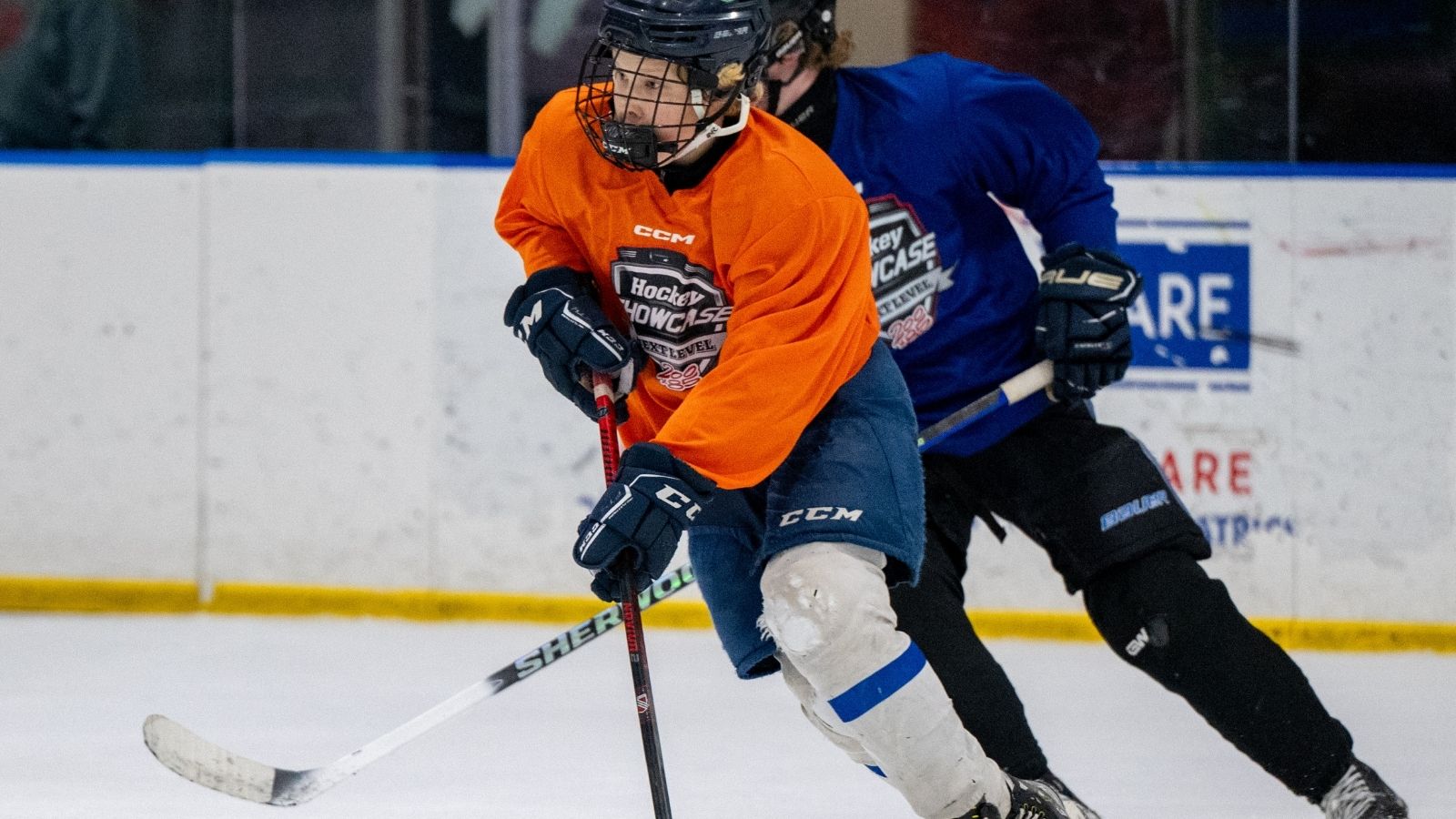
The showcase experience begins with on-ice sessions led by coaches, where scouts observe players in a structured environment that highlights habits, hockey IQ, and coachability. This setting provides a more complete evaluation than games alone.
Throughout the event, coaches and scouts are integrated behind the bench, allowing for continued interaction and communication with players. This format creates a more personal evaluation process and helps players build relationships that can extend beyond the event itself.
Off the ice, player development continues through coach and scout meet-and-greets, as well as educational seminars designed to guide families through the recruiting process. These sessions provide valuable insight into what junior and college programs are looking for, helping players better prepare for the next step.
Competing Against Top Talent from Across North America
Exposure is only valuable if it happens in the right competitive environment.
CCM Hockey Showcases bring together players from across North America and beyond, including athletes from AAA, AA, high school, and junior programs. Each player goes through a vetting process to ensure a high and consistent level of competition.
The result is a fast-paced, balanced environment where players are challenged, scouts can evaluate effectively, and performance truly reflects a player’s ability. For many participants, it’s an opportunity to compete against talent they wouldn’t typically face during the regular season.
The Right Environment Makes the Difference
There is no single path to junior hockey or college hockey anymore. Every player’s journey is different, shaped by their development, timing, and the opportunities they pursue along the way.
What remains constant is the importance of being in the right environment—one that provides exposure to multiple levels, meaningful evaluation, and the chance to compete against top talent.
For players serious about reaching the next level, understanding the pathway is important. But putting yourself in a position to be seen, evaluated, and developed is what ultimately makes the difference.
Recent News

Five Ways to Improve How You Practice
Oct 21, 2026
Looking For Scorekeepers at CCM World Invite
Oct 21, 2026
Advertisement


Championship Belts Claimed in Hockeytown: Recapping the 2026 CCM Motown
Oct 19, 2026

1,255 games, 66 sheets of ice, 37 facilities… The CCM World Invite Schedule is LIVE!
Oct 16, 2026